
Baking with frozen berries: how to stop colour bleeding and soggy cakes
Frozen berries are a baker's friend: always in stock, always ripe, and cheaper than fresh. They only need slightly different handling. Most problems (purple batter, berries sinking, wet patches) come from thawing them first.
Rule 1: keep them frozen
For muffins, cakes, scones and loaf cakes, do not thaw the berries. Thawed berries release juice into the batter, which turns it grey-purple and makes it wet. Take them from the freezer at the very last moment.
Rule 2: coat them in flour
Toss the frozen berries in one tablespoon of flour from the recipe. The thin coating absorbs surface moisture and helps them stay suspended instead of sinking to the bottom.
Rule 3: fold them in last, gently
Mix the batter completely, then fold the berries in with three or four slow turns of a spatula. Over-mixing breaks them and spreads the colour.
Adjust the baking time
Frozen fruit cools the batter, so add 3 to 5 minutes to a muffin bake and 5 to 10 minutes to a loaf. Check with a skewer in the centre.
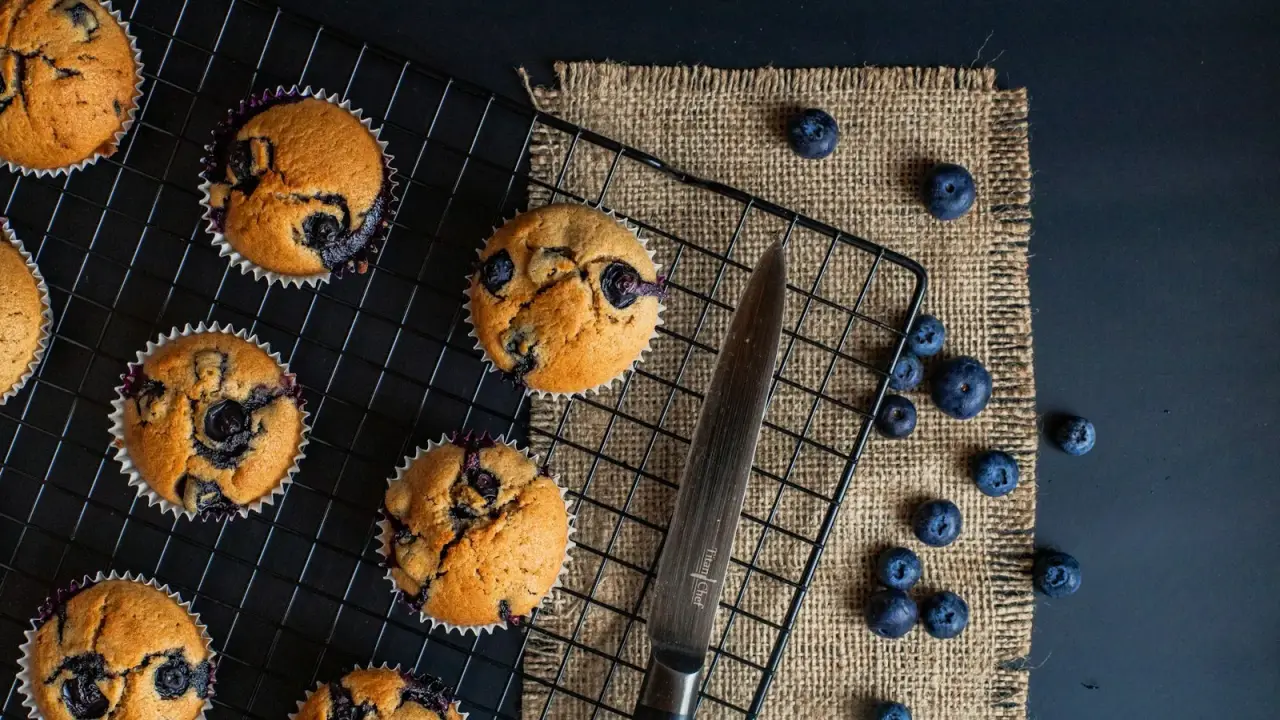
A simple blueberry muffin method (12 muffins)
- Mix 300 g flour, 150 g sugar, 2 teaspoons baking powder and a pinch of salt.
- Whisk 2 eggs, 120 ml oil, 200 ml milk and vanilla.
- Combine wet and dry with a few strokes; a lumpy batter is fine.
- Fold in 200 g frozen blueberries, coated in flour.
- Bake at 190°C for 22 to 25 minutes.
When you should thaw
For fillings, sauces, jams and cheesecake toppings, thaw the fruit in the fridge or cook it straight from frozen. Use the juice, it carries flavour. For a quick sauce, see the coulis in five ways cafés use raspberries.
Storage reminder
Return opened bags to the freezer immediately and keep them at -18°C. Our storage guide has the full checklist.